

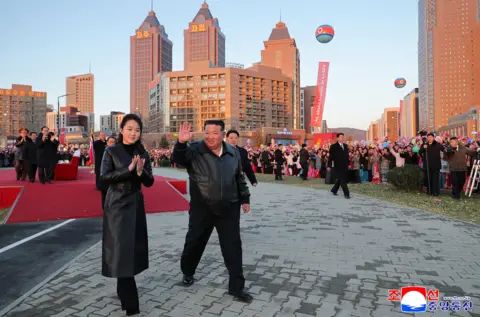
Amid threats towards Seoul and vows to grow the nuclear weapons arsenal, a key question persisted at the recent party congress: could the supreme leader's young child be anointed as the heir?
Even though conclusive news did not surface at the event, it has ignited a widespread discussion about the young girl's potential as the next ruler of the populous country, a dictatorship exclusively governed by the Kim family bloodline.
Growing Presence and Analysis
The teenager has become more present in official broadcasts alongside her parent. Nonetheless, plenty about her continues to be shrouded in mystery. Pyongyang has consistently refused to publicly published her identity or stated her date of birth.
Her existence was initially made known internationally in 2013. Over the years, she is widely thought to be 13 years old, in part on analyst assessments.
Indications of Succession
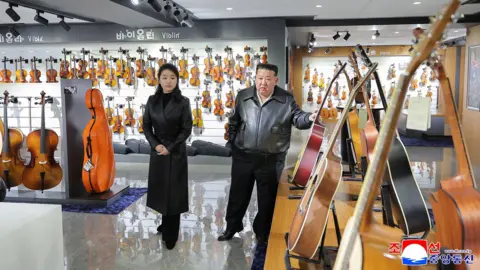
Experts highlight several significant indicators. Her frequent public sightings—frequently positioned in the frame—and the use of respected language traditionally used for the supreme leader are seen as clear evidence.
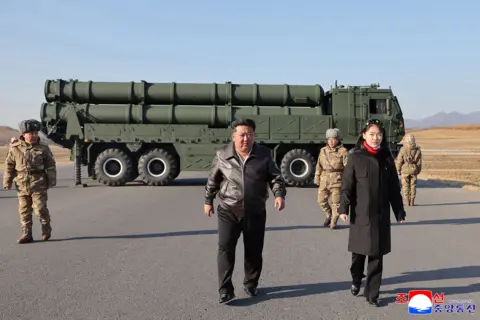
Furthermore, her proximity with the military is considered an additional important piece. She has observed forces and missiles together with her father. Multiple times, senior commanders have been seen stopping beside her to whisper at military parades.
"The state media is employing language set aside for the ruler. It underlines her own revered status," says one leading analyst.
Such military indoctrination is thought vital, as ultimate power in North Korea rests with command over the army. To be a credible heir, she must present herself as a capable figurehead.
Discussion Over Gender and Tradition
Yet, a significant skeptical perspective is raised. Some analysts believe that North Korea's inherently male-dominated system presents an formidable obstacle for a girl leader.
Observers highlight that women at all rank struggle for fair recognition. Women leaders in high roles are extremely scarce. Common practices also demonstrate these norms.
"When it happens, they end the trip then go to the rear of their car and expectorate thrice to ward off the bad luck," explains a one-time North Korean insider.
Evolving Social Landscape
On the other hand, other analysts contend that the position of women in North Korea has evolved notably since the 1990s.
In that period, as the official economy weakened, women often became the primary providers, pursuing private commerce. This has allegedly led to a slow shift in gender roles.
One expert who has spoken to numerous defectors suggests that it is now no longer uncommon to see women in leadership roles within the regime.

"It is wrong to analyze North Korea with outside framework. We must imagine them as the royal court," says the expert. "What person would dare defy someone of royal heritage who is assuming the supreme position?"
Strategic Maneuvers
Latest political appointments are also being analyzed. The appointment of Kim Yo Jong, the leader's powerful sibling, to a key propaganda position is seen by some as a move to install a protector for the possible heir.
In the end, experts are divided. Some see the focus on Ju Ae as a deliberate ploy to improve the leader's image and signal another dynastic transfer of power. Others believe the signals of her grooming are sufficiently substantial to dismiss.
Irrespective, the speculation in and of itself may fulfill a goal for the Pyongyang, keeping global attention firmly fixed on the enigmatic Kim family rule.


